

By Dustin Cabeal
As comic readers, I think there are always characters that people want to write or draw more than other characters. There is something about them that inspires the imagination—be it a story element or background piece that entices the mind to daydream about the endless possibilities with that particular character. Deathstroke is one of those characters for me. This particular volume of his titular series really digs into his long and rich backstory: Deathstroke’s creation of the League of Assassins, his wife, his children, his extensive training, and his abilities. It puts all the complicated pieces together in a cohesive, understandable package for new readers while also exciting longtime readers. It’s a series that reminds everyone what makes a comic great and why nothing else can replace it.
There is something about summing up the story of a comic by saying it’s “X, Y, Z” that is annoying to write, read, and receive as feedback for creators. In all my years of reviewing and writing, it’s the part I will always struggle with because while I can simply tell you what is in a paragraph, that almost always makes it seem as if it’s a simple story. If it’s that simple to sum up, it must not be that good, but when you do the same for a two-hour movie, suddenly people are curious. Keep that in mind, and you’ll be able to see the depth of the first eight issues.
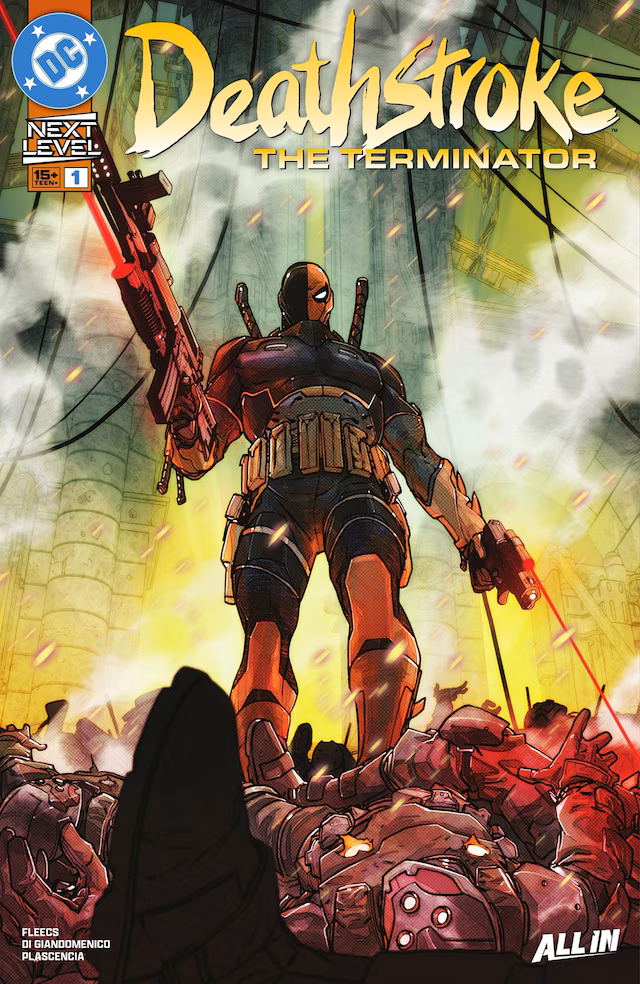
There has been a long-established pattern for Deathstroke: the man who needs no one needs Wintergreen. His handler and longtime friend looks after his family almost as a surrogate father to them all while Deathstroke takes assassination jobs. In a strange way, Wintergreen has become the moral compass for Deathstroke and a crutch for his character development. Series after series will work Wintergreen back into the mix. The first time I read a Deathstroke series and Wintergreen appeared, I recall thinking, “Who is this character?” Later, that question morphed into why this character is important to Deathstroke, to which I still do not have an answer. This new series asks the question: who is Deathstroke without Wintergreen?
No, that doesn’t mean they break up the band and stop being friends—it means that Wintergreen is killed, and in a strange twist, Deathstroke is framed for his murder. The fall of this domino sets off the rest of the story, in which Deathstroke must fight his way out of numerous tight spots, killing everyone in his way. The frame job, though, means that he’s broken one of his own rules and now finds a hit out on himself and other assassins coming to collect the bounty on his head. This all leads to a fairly obvious reveal of who is the mastermind behind it all, but in writing that, I will also say that the story does an incredible job of feeding you all the clues beforehand.
While I have no plans to reveal it in this review, it does tie into his past, his family, and sets up a very different Deathstroke. He’s faced with the challenge of being without his considerable resources of weapons, armor, money, and—most importantly—information. When you strip everything away from him and all you’re left with is ego, enhancements, and skills, is he truly the world’s greatest assassin?
There is another underlying mystery that has been revealed at the end of issue eight, but in making the reveal, they have set up another mystery, which is where I’ll jump into the writing quality of this series. Tony Fleecs has so much going on in these issues, which are also surrounded by some of the best action sequences I’ve read in comics. As I said, we’ve had two mysteries revealed with a third introduced, and that seems to be the overarching surface-level story pace and world-building. While that’s happening, we’re constantly diving into the struggles of Slade’s mind through two different approaches: his conversations with other characters and his conversations with himself. Does Slade have any feelings? I think this is an amazing question because while he’s a cool character with an outfit that looks threatening, continues to evolve, and has an eyepatch and silver hair, can you imagine being his kid? He shows up to one basketball game, and you’re going to play your ass off, and even if you shoot the winning bucket, he’ll still tell you that your footwork was sloppy and you left too many open men on your team because he doesn’t know how to say, “I love you.” Why? Because that’s the next big question: can he even love? Not who does he love, which you’d think is his family, but is the man even capable of it? Fleecs’s construction of the story and depth of the character make this a special series to read, and while it’s a comic book and anything can change in the future, my hope is that he’ll put a new definitive stamp on the character by the end of his run.
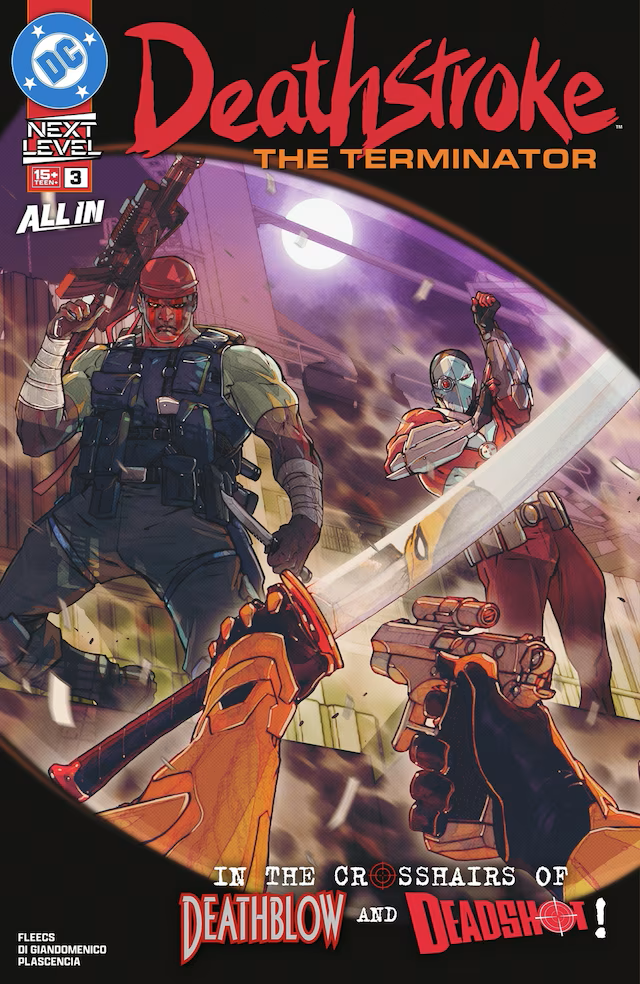
Putting the visuals together is Carmine Di Giandomenico. Those impressive action sequences I talked about earlier come from Di Giandomenico, who from the very beginning gives this series a distinct visual look. It doesn’t scream “superhero” comic, but it doesn’t feel out of place in the DCU either. Di Giandomenico manages something that has become rarer and rarer in comics: making all the characters recognizable and yet distinct to his art style. A lost art of superhero comic books is when a character is removed from their costume and the reader is left wondering why they look the way they do and how long before they’ll be back in costume. That might seem nitpicky or stupid, but if an artist can only draw Batman’s chin and makes an unrecognizable Bruce Wayne, it is jarring and snaps the reality that the art and story are creating. There’s a scene in which Slade and Rose are at a diner out of costume, and never once was the reality broken for me because I still saw them as the characters they were pages ago in their costumes. I’m spending a lot of time on this because it really has become a lost art or element in superhero comic books to the point that I think a lot of writers will even avoid trying to take them out of costume, even if it hurts the story.
Yes, I’m an easy mark for Deathstroke. I’ll read an ongoing or a miniseries because no matter how many stories are told with the character, the potential for more is always there. The team of Fleecs and Di Giandomenico is showing that as they dust off Deathstroke’s past and figure out who the character can be in the future. The writing, the pacing, the art, and the action are all working together to deliver a memorable story that any comic fan should pick up and enjoy.
Score: 8.5/10
Deathstroke: The Terminator
DC Comics
